
Mission-Fit Enrollment Funnel: Rethinking Lead Quality in Higher Education
Build a mission-fit enrollment funnel that values student alignment, conversion, yield, and retention over raw inquiry volume.


Branding
Marketers have spent years learning how to improve their higher education advertising strategy.
We have learned how to segment audiences, build retargeting campaigns, optimize landing pages, track conversions, and squeeze more value out of every click.
But the digital environment is changing fast.
Students are harder to reach. Attention is more fragmented. Search behavior is shifting. Artificial intelligence is reshaping how people discover information. Automated traffic is making it more difficult to know whether the engagement we are seeing comes from a real prospective student or a machine.
That does not mean colleges and universities should abandon digital marketing.
It does mean we need to stop treating digital advertising as the only meaningful path to awareness.
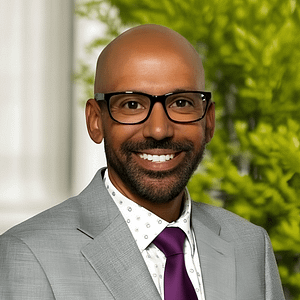 In this episode of The Higher Ed Marketer podcast, I spoke with my friend Harrison “Soup” Campbell, Chief Growth Officer at NextGrad. Soup has spent more than 20 years in education, enrollment management, marketing, admissions, edtech, sales, and community building.
He has worked as a teacher, admissions counselor, director of admissions, dean of admissions, and higher education technology leader. Today, he helps colleges connect with students through NextGrad’s growing in-school media network.
Our conversation centered on a challenge every enrollment leader should be thinking about:
How do you build a stronger higher education advertising strategy when the digital environment becomes less predictable?
The answer is not to replace digital marketing.
The answer is to diversify it.
For years, many institutions have leaned heavily on digital campaigns because the appeal is obvious.
Digital is measurable. It is scalable. It is targetable. It can be turned on quickly, adjusted in real time, and tied to landing pages, forms, applications, and enrollment activity.
But digital advertising works best when it supports a larger brand ecosystem.
It cannot do all the work by itself.
A perfectly targeted ad does not automatically create trust.
A clever headline does not instantly produce curiosity.
A well-designed landing page cannot compensate for a complete lack of brand awareness.
As Soup explained:
“We’ve been so heavily reliant on just our traditional digital marketing over the past few years, right? But what we’re learning is like students just aren’t gonna click on stuff if they have no idea who you are.
So they’re not going to “like” your posts, they’re not going to engage [with your content,] if you’ve not done the groundwork ahead of time to lay that foundation of brand awareness, that saturation of who you are.”
They work better when a student has seen your name before.
They work better when a parent has heard of you.
They work better when your brand feels familiar enough to deserve a second look.
A stronger higher education advertising strategy starts by building that familiarity earlier.
That means colleges should ask a broader set of questions:
The institutions that answer those questions well will be better positioned to make their digital campaigns more effective.
Higher education has traditionally organized recruitment around the funnel.
We buy names. We load them into the CRM. We send emails. We text. We launch digital ads. We invite students to visit. We push them toward application and deposit.
That model still matters, but it begins too late for many students.
The college decision process often starts long before a student becomes a formal inquiry.
Students form impressions through social media, family conversations, school counselors, classroom experiences, peer recommendations, campus visibility, and repeated exposure to institutional brands.
Soup was direct about the need to shift our timing:
“The days of waiting to begin actively recruiting prospective students until they’re juniors or seniors in high school are over. If that is how you are still operating, you need to make some significant changes.
One of the things I’ve been asking a lot of people is, ‘Do you have an in school media strategy?’”
That is a challenging question because many institutions do not have a clear answer.
They may have a travel calendar.
They may have a name-buying strategy.
They may have a junior search campaign.
They may have digital display, paid social, search, retargeting, and video advertising.
But they may not have a true in-school media strategy.

A ninth grader may not be ready to request information from your college.
A sophomore may not yet know what major they want.
A student may not have taken the PSAT, created a college list, or attended a college fair.
But they are still forming opinions.
They are still absorbing messages.
They are still beginning to imagine what life after high school could look like.
That is where early brand awareness can make a real difference.
You are not asking them to apply.
You are helping them recognize your name.
You are giving them a reason to remember you.
You are beginning the relationship before the transaction.
One of the most compelling ideas in this episode was the high school as a trusted, relevant, and increasingly distraction-reduced environment.
Students spend a significant portion of their day there.
They are learning, planning, talking with peers, meeting with counselors, and thinking about what comes next.
That makes the school building more than a physical location.
It is a context.
And context shapes how a message is received.
A college message seen while a student is scrolling late at night may be ignored in seconds.
Soup described the high school environment this way:
“It’s one of the last remaining like sacred spaces, right? Like [high school] is a sacred space. It is where these students are spending a lot of their time, eight, nine hours a day, five days a week.
It’s the space where they’re thinking about their futures. They’re thinking about what’s gonna come next after high school. And what I love about it is that it’s also increasingly becoming a distraction free environment.”
That last point is especially important.
Colleges have spent years chasing attention on devices.
But what happens when the phone is no longer the only meaningful place to reach a student?
This is where in-school media can complement digital marketing.
NextGrad’s network includes digital screens, vertical kiosks, posters, and custom placements inside schools. In some cases, institutions can explore creative executions tied to specific feeder schools or local markets.
That kind of presence can help institutions:
A student might first see your brand on a school screen.
Later, they may encounter your video ad.
Then they may search your name, visit your website, watch a student story, or open an email.
That sequence is much more powerful than expecting a single digital impression to carry the full weight of awareness, interest, trust, and conversion.

The rise of artificial intelligence makes this conversation even more urgent.
AI is transforming content creation, search, targeting, measurement, and automation.
Some of those changes are incredibly useful.
Others create new uncertainty.
Marketers are increasingly asking whether the engagement they see online represents real human attention.
Soup raised concerns about automated agents, bot activity, and the reliability of traditional digital ad environments.
His broader point was not that digital advertising has lost all value. It was that institutions should be more cautious about placing all their confidence—and all their budget—in systems they do not fully control.
That is why “real eyeballs” matter.
That does not make in-school media immune to poor strategy.
The creative still has to be strong.
The message still has to be relevant.
The audience still has to be right.
The institution still needs a compelling brand.
But it gives marketers another meaningful way to create verified human exposure.
This is especially valuable for small and mid-sized institutions that cannot outspend larger competitors.
You may not have the budget to dominate every digital channel.
You may not be able to win every search auction.
You may not have enough awareness to make retargeting effective at scale.
But you may be able to become more visible in the schools and markets that matter most.
That is a strategic advantage.
A diversified higher education advertising strategy does not require abandoning what already works.
It requires looking honestly at where your current approach is too dependent on one channel.
Start by reviewing your existing media mix.
Ask how much of your awareness budget depends on Google, Meta, search, social, and programmatic display.
Then ask what happens if those channels become more expensive, less transparent, or less effective.
From there, consider how to add other forms of visibility.
That may include:
The best mix will vary by institution.
A regional college may focus on feeder schools within driving distance.
A niche STEM institution may target schools with strong math and science programs.
A faith-based institution may prioritize schools, churches, and communities that align with its mission.
A private college may build awareness in markets where it needs stronger name recognition.
The important thing is to stop expecting one channel to do everything.
Soup’s final advice was simple and clear:
“If you don’t currently have an in-school media strategy—or you’re hearing that term and realizing you’re not even sure what it means—that has to change. If you work in enrollment or marketing, you need to figure out what your in-school media strategy is.”
That is the question I hope every higher education marketer takes away from this episode.
Not, “Should we stop digital advertising?”
But, “What are we doing beyond it?”
A resilient marketing strategy is diversified.
A student-centered marketing strategy reaches people in places that make sense to them.
And a future-ready higher education advertising strategy creates familiarity before demanding action.
For even more insights from Harrison “Soup” Campbell, listen to the full episode on The Higher Ed Marketer podcast.
Strengthen Your Institution’s Marketing Mix With Caylor Solutions
At Caylor Solutions, we help colleges and universities build mission-fit marketing strategies that connect the right students with the right institutions.
That includes evaluating your current media mix, clarifying your message, identifying gaps in brand awareness, and creating campaigns that work across digital and physical channels.
Your institution does not need more disconnected tactics.
It needs a strategy that helps every channel reinforce the others.
When your brand, messaging, creative, website, advertising, and enrollment goals work together, your institution is better positioned to reach students earlier and guide them with greater clarity.
Caylor Solutions can help your team build a more diversified, student-centered approach to enrollment marketing—one designed for real people, real decisions, and real growth.
Contact us today to learn more.
The essential marketing book every higher education institution needs! If you are a higher education marketing professional seeking a fail-safe plan to make your institution stand out, “Chasing Mission Fit” is your guide.
 Discover how to:
So you can empower your institution with audience-focused marketing strategies, and attract mission-fit students who will flourish in your unique academic environment.
Ready to transform your institution’s marketing approach?
Order now!
Featured image via nextgrad.com



Subscribe to The Higher Ed Marketer podcast today!
Build a mission-fit enrollment funnel that values student alignment, conversion, yield, and retention over raw inquiry volume.

Discover why higher ed differentiation matters for Christian colleges and how Grace College is using mission, location, and community to stand out.

Use higher ed YouTube marketing to build trust, show real campus life, and guide students before they visit.