
Mission-Fit Adult Enrollment: How to Reach the Right Adult and Graduate Students
Mission-fit adult enrollment starts with clarity, relevance, and trust. Learn how to reach adult and graduate students more effectively.


Branding
A successful higher education press release strategy should operate like a higher ed newsroom, producing timely, human-centered stories that journalists can use and audiences will care about.
Higher education communications teams have no shortage of stories.
Every campus is filled with student breakthroughs, faculty expertise, community partnerships, career preparation, alumni success, research, athletics, service, and programs that change lives.
The problem is rarely a lack of material.
The problem is often how that material gets packaged.
Too many institutions still rely on a traditional higher education press release strategy built around announcements, internal language, long introductions, and institutional boilerplate.
The result may be technically accurate, but it is not always useful to journalists, compelling to readers, or connected to enrollment goals.
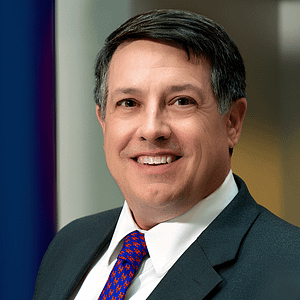 That is why my conversation with Dave Murray, Associate Vice President for Marketing and Communications at Ferris State University, was so refreshing.
Dave has spent his career on both sides of the notebook. Before moving into higher education communications, he worked for more than 25 years in journalism, including roles covering education, politics, and local communities. He later served in communications leadership for the State of Michigan and Governor Rick Snyder before joining Grand Rapids Community College and, eventually, Ferris State University.
Dave does not want his team to function like a traditional press office.
He wants them to operate like a newsroom.
That means finding human stories, writing with urgency and clarity, leading with what matters, including strong photography, understanding what journalists need, and publishing consistently enough that the institution becomes familiar, credible, and visible.
In other words, stop writing press releases.
Start producing news.
One of the strongest ideas Dave shared came from his years teaching journalism.
He used to write three words on the board for his students:
Make me care.
That standard is simple, but it changes everything.
A traditional press release often begins with what the institution wants to announce. A newsroom-style story begins with what the audience will find meaningful.
Those are not always the same thing.
Your institution may want to announce a new program, grant, partnership, facility, award, appointment, or event. But the reader is asking different questions:
Dave described how he looks for those answers by actively hunting for stories.
During a Ferris State commencement ceremony, he noticed a young mother with a baby tucked beneath her graduation gown. That visual led him to a story about a nontraditional student who had completed online coursework and brought her daughter to commencement because the child had been part of the educational journey, too.

That was more than a commencement announcement.
It was a story about persistence, access, family, online learning, and transformation.
It also had a powerful photograph.
The story traveled because it made people care.
This is the first shift higher ed teams need to make: move from institutional importance to human importance.
A newsroom does not ask only, “What happened?”
It also asks, “Why will someone stop and pay attention?”
Newsrooms today are stretched thin.
Reporters are expected to publish quickly, cover broad beats, produce digital content, gather visuals, and often turn around multiple stories in a single day.
Dave shared that one local reporter told him he was responsible for producing three stories a day—15 stories a week.
That reality should change the way higher ed communicators approach media relations.
Instead of asking journalists to translate institutional language into publishable news, do more of the work for them.
Dave explained his philosophy this way:
“I write it as if it’s a straight news story, knowing that important information has to be up top. You gotta make people care. I used to, when I was an adjunct professor teaching journalism, write on the board on the first day, ‘Make me care’ in big letters. And that approach applies to our news stories too.”
That means abandoning some of the habits associated with the old higher education press release strategy.
Do not bury the point in paragraph four.
Do not begin with a ceremonial phrase about how the university is “pleased to announce.”
Do not lead with titles, committees, or institutional process.
Do not force journalists to hunt for the real angle.
Instead, lead with the most interesting, timely, or consequential fact.
Then support it with:
For example, when Ferris State tells a story about its HVAC program, the team does not stop at describing classroom activity. It can connect the program to workforce demand, labor statistics, career outcomes, and the fact that Ferris offers one of only a small number of bachelor’s programs in that field.

That turns a program update into a useful, timely story.
It also creates a natural bridge to enrollment.
A newsroom-style higher education press release strategy is not less strategic.
It is more strategic because it aligns institutional goals with audience needs.
Dave returned to photography several times during our conversation, and for good reason.
A strong image can stop the scroll, create emotional connection, improve media pickup, strengthen social performance, and make a story more memorable.
But not every image does that.
A photograph of an empty lab, a building, a machine, or a ribbon-cutting line may document an event, but it may not tell a story.
Dave looks for photographs that show students doing real work, interacting with technology, participating in their programs, and moving toward a meaningful future.
He explained:
“If I can show them working on a plastics injection machine that we have some really cool ones, right? But just the photo of the machine itself isn’t gonna excite anyone. But my student, if they’re branded even better, working on that machine, showing a viable career path, showing that this is a skill that you can learn if you come here to Ferris State, that’s gonna help sell the story through the picture.”
That is a helpful distinction.
Do not show only the new space.
Show students learning in it.
Do not capture only the award.
Capture the emotion, effort, or impact behind it.
Ferris State supports this approach by building a strong photo library over time. Dave’s team schedules visits to academic departments, photographs students in action, works with staff photographers and student interns, and brings in experienced freelancers when needed.
That preparation matters.
When a timely story emerges, the team already has relevant visual assets organized and ready to use.
For teams with limited resources, the lesson is not that every story requires an expensive photo shoot.
The lesson is that photography should be part of the editorial process, not an afterthought.
Even a strong smartphone image can work when it captures an authentic moment with good composition, light, and human interest.
The goal is not merely to decorate the story.
The goal is to help tell it.
Dave’s team aims to publish at least one news story a day.
For many higher ed communications professionals, that volume may sound unrealistic.
But Dave has seen the strategy work at both Grand Rapids Community College and Ferris State.
The key is that the stories cannot be empty.
They need to be relevant, human, useful, and tied to institutional strengths.
At Grand Rapids Community College, the president told Dave he was tired of hearing that the college was West Michigan’s “best-kept secret.”
That same philosophy now shapes the work at Ferris State.
The steady drumbeat serves several purposes.
First, it builds awareness.
People may not remember every story, but repeated exposure creates familiarity.
Second, it educates stakeholders.
Faculty, staff, alumni, donors, community leaders, parents, and prospective students gain a fuller picture of the institution.
Third, it creates more opportunities for media coverage.
Not every outlet will pick up every story, but consistent output increases the chances that the right story reaches the right newsroom at the right time.
Fourth, it strengthens reputation before a crisis occurs.
Dave put it this way:
“If they see that steady drumbeat, it could be a post here, it could be a news story here, it could be a video on an Instagram. But if they see that over and over and over—good news, good news, or even accurate, helpful news—when the bad news happens, and it will happen, it’s, ‘Wow, Ferris is having a bad day.’”
That is an important reputation insight.
It begins months and years earlier through consistent, credible communication.
When the public knows your institution only through negative headlines, a difficult story can define the brand.
But when people have already seen a broad and accurate picture of your students, programs, people, and impact, they are more likely to understand the bad news in context.
This is not about flooding the market with fluff.
It is about earning trust through useful storytelling.
One of the biggest advantages of newsroom-style content is that a single story can work across many channels.
Ferris State sends stories to media outlets, publishes them on its own website, shares them through social media, includes them in weekly stakeholder newsletters, and distributes internal emails highlighting both new stories and earned media coverage.
That gives every story a longer life.
It also ensures the communications team is not measuring success only by whether a newspaper publishes it.
A story can inform alumni.
It can engage current students.
It can give admissions counselors something useful to share.
It can help faculty promote a program.
It can provide content for digital advertising.
It can support search visibility.
It can strengthen a parent’s confidence.
It can create another proof point for prospective students evaluating fit and value.
Every story should be part of a broader content ecosystem.
Consider how the same core story can become:
The newsroom model is not just about writing faster.
It is about creating adaptable content that serves multiple goals.

Good stories matter, but relationships still matter, too.
Dave encouraged higher ed communicators to understand the pressures reporters face, thank them when they do strong work, be available outside normal office hours, ask how they prefer to receive stories, and help them find experts, students, faculty, visuals, and background information quickly.
The goal is not to manipulate coverage.
The goal is to become a credible, responsive source.
Send a thank-you note when a journalist tells a story well.
Compliment a strong piece even when it has nothing to do with your institution.
Invite reporters to campus.
Ask what kinds of stories they need.
Learn whether they prefer stories through the main news desk, direct email, or another channel.
Respond when they call.
Follow through when you promise information.
And most importantly, help them do their jobs.
Trust is built in small moments.
Over time, that trust changes the dynamic.
Instead of seeing your institution as another source of bloated announcements, reporters begin to recognize your team as a reliable partner with useful ideas, strong visuals, timely experts, and publishable stories.
That is when your higher education press release strategy becomes a true media relations strategy.
Dave closed our conversation with advice that may be the most practical takeaway of the entire episode:
News does not happen at your desk.
He makes a point of eating in the campus dining hall, attending events, walking through student activities, talking with faculty and staff, and spending time where campus life is actually happening.
That is where people tell him what they are working on.
That is where stories surface naturally.
“I get so many great stories over a hamburger. It’s fantastic. So show up at the events, go to the concerts, go to the events on the quad, go to when they have all the student tents and the student organizations. Go and shake their hands and say hi, look at their swag, ask them what they do, and get to know people.”
This is the heart of the newsroom mindset.
They are found in classrooms, labs, studios, residence halls, athletic facilities, dining spaces, performances, service projects, and student organizations.
The more visible and curious your communications team becomes, the more likely people are to bring stories to you.
And once faculty and staff begin seeing their colleagues featured in strong stories, they become more willing to participate.
Momentum builds.
The newsroom starts feeding itself.
The future of higher ed communications will not be built on more announcements.
It will be built on better stories.
A modern higher education press release strategy should help journalists work faster, give audiences a reason to care, support enrollment priorities, strengthen reputation, and create content that travels across earned, owned, social, and paid channels.
That requires a different set of habits:
And keep asking, “Why should anyone care?”
For even more insights from Dave Murray, listen to the full episode on The Higher Ed Marketer podcast.
Tell Stories that Resonate
At Caylor Solutions, we help colleges and universities turn institutional strengths into stories, campaigns, and enrollment experiences that resonate with the right students.
From messaging and content strategy to digital marketing, websites, and brand development, we help higher ed teams move beyond scattered announcements and build a communications approach that supports long-term enrollment and reputation goals.
Your campus already has the stories.
The next step is building a system that finds them, shapes them, and gets them in front of the people who need to hear them.
Ready to strengthen your higher ed storytelling and connect communications more directly to enrollment?
Talk with Caylor Solutions about building a content and marketing strategy designed around your institution’s distinctives.
The essential marketing book every higher education institution needs! If you are a higher education marketing professional seeking a fail-safe plan to make your institution stand out, “Chasing Mission Fit” is your guide.
 Discover how to:
So you can empower your institution with audience-focused marketing strategies, and attract mission-fit students who will flourish in your unique academic environment.
Ready to transform your institution’s marketing approach?
Order now!
Images via Ferris State University and chatgpt




Subscribe to The Higher Ed Marketer podcast today!
Mission-fit adult enrollment starts with clarity, relevance, and trust. Learn how to reach adult and graduate students more effectively.

Small colleges can’t afford to waste budget. Learn how to build brand awareness organically—by prioritizing lead generation and smart content.

Future-proof your enrollment marketing strategy with insights on stealth students, personalization, AI, and human connection.