
Why We Need to Improve Higher Ed Creative Operations
Improve higher ed creative operations with practical strategies for protecting creative time, streamlining workflows, and supporting stronger teams.


Branding
In today’s turbulent admissions landscape, mission-driven enrollment strategies are emerging as a powerful tool for Christian colleges seeking to stand out and succeed.
Many institutions are grasping for anything that feels steady—new technologies, revised policies, and bold marketing pivots.
But for Christian colleges and universities, the clearest path forward might not be new at all.
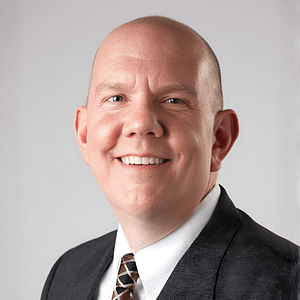 In this episode of The Higher Ed Marketer, we had the pleasure of speaking with Keith Ramsdell, President of NACCAP (North American Coalition for Christian Admissions Professionals), about the mounting challenges facing admissions leaders and why staying faithful to your mission isn’t just good theology—it’s smart strategy.
Keith joined us on the podcast just 11 weeks into his new role at NACCAP, bringing decades of leadership in enrollment management across both public and private institutions.
But it’s his unique blend of operational know-how and spiritual grounding that makes his insights both timely and deeply resonant.
If you work in enrollment right now, you don’t need anyone to tell you how intense the pressure is.
Keith sees it across the country in conversations with NACCAP members.
Admissions professionals are carrying a heavy weight as they face challenges from demographic cliffs, policy changes, institutional closures, and shifting cultural values.
“We have felt pressure before,” Keith shared, “but I don’t think we’ve ever felt pressure like we’re feeling right now.”
He makes the compelling case that this isn’t the time to blur our identity—it’s the time to boldly claim it.
“Those schools that are truly leaning into their mission have performed better,” he explained. “That’s almost counterintuitive… because the temptation is to water down the mission to widen the doors. But the data and stories are showing the opposite.”
As Keith pointed out, mission-driven enrollment strategies are more than aspirational ideals. They’re proving to be practical enrollment advantages.
In a sea of institutions trying to appeal to everyone, differentiation is key.
Keith emphasized how faith-based colleges must resist the “me too” marketing trap, trying to compete with public institutions on their turf rather than playing to their unique strengths.
Both Keith and my take on this is straightforward and simple…

They should offer an alternative—a values-driven, mission-aligned, whole-person experience.
And families are looking for it.
Keith points to rising interest in Christian K-12 education, the explosive growth of classical education, and the increase in homeschooling as signals that many families want something more meaningful.
These trends don’t stop at high school graduation. They also extend into higher ed choices.
“I just spent last Friday with a friend who’s the superintendent of Mansfield Christian Schools. He’s showing me a $30 million building project they’re launching because they’re busting at the seams. Parents are looking for something different.”
In addition to strategic decisions, Keith shed light on an often-overlooked aspect of admissions work: the emotional and spiritual load that enrollment teams carry.
Admissions professionals are more than recruiters. In reality, they are often the first line of institutional sustainability.
And that’s a weighty assignment, especially for younger staff.
“If we actually believe we’re going to put the future of the institution on a half dozen 25-year-olds, we’ve got a real problem,” Keith said. “Not that they aren’t capable—but that’s a whole lot of pressure.”
This heart-centered leadership doesn’t dilute excellence. Rather, it enables it.
It also aligns with the deeper mission of Christian institutions: to love and serve not just prospective students, but the very staff called to recruit them.
One of the strongest themes in our conversation with Keith was the untapped power of storytelling.
In a world saturated with polished marketing and AI-generated content, authenticity reigns supreme.
And in Christian higher ed, our students’ transformation stories are our most valuable asset.
“What I want to hear from a tour guide isn’t just the facts. I want to hear how God worked in their life, the best friends they made, the transformation they experienced. That’s what parents and students need to hear.”
Christian colleges have an unmatched opportunity to center faith-based storytelling in their communications strategy as part of their mission-driven enrollment strategies.
Whether it’s in short-form video, campus tours, podcast interviews, or digital campaigns, these stories build trust—and trust builds enrollment.
Keith stressed that storytelling doesn’t have to be long or polished.
It just has to be real.
This is especially important as skepticism around marketing increases and families seek authentic, trustworthy voices to guide decisions.
Admissions teams need to see themselves not only as marketers, but as story curators and story sharers.
Keith also spoke powerfully about the future of graduate enrollment, another area ripe for innovation and improvement.
Having worked in graduate enrollment for over 15 years, he knows firsthand how different the landscape is from traditional undergrad admissions.
Too many institutions, he argues, try to fit graduate recruitment into the undergrad mold—and it simply doesn’t work.
“You have to build bridges to the academic side. The questions grad students are asking often can’t be answered by an admissions counselor. They need faculty voices.”
Keith offered up some great advice here…
Get intentional.
Invite faculty to lunch.
Learn about the curriculum.

Build relationships of trust that allow collaboration, not conflict, between marketing, admissions, and academics.
This relational approach is just another example of how Christian institutions can model something different—a culture of cooperation grounded in mutual respect, mission alignment, and mission-driven enrollment strategies.
As Keith looks ahead in his new role at NACCAP, his vision is clear: to equip admissions professionals across North America with the tools, training, and community they need to thrive and to implement strong mission-driven enrollment strategies.
That includes everything from new graduate enrollment initiatives and K–12 outreach to deeper vendor partnerships and research opportunities.
But more than tactics, Keith is calling admissions professionals to focus on value.
“We have to demonstrate our value proposition to our members. So that in turn, they can demonstrate their value proposition to prospective students and families.”
As NACCAP strengthens its own mission clarity and collaboration, it empowers Christian colleges to do the same.
Faith-based institutions don’t have to play by the same rules.
In fact, their greatest strength is in doing the opposite, leaning into the very things that set them apart.
Mission clarity, authenticity, storytelling, and community collaboration aren’t nice-to-haves.
They’re essential pillars of resilience in an uncertain admissions future.
For those that haven’t yet embraced it, this is your invitation!
The admissions landscape may be changing, but the call to be faithfully different remains the same.
For even more insights from Keith Ramsdell, listen to the full episode on The Higher Ed Marketer podcast.
Let’s Talk About Your Mission-Driven Strategy
At Caylor Solutions, we specialize in helping faith-based institutions amplify their mission through enrollment strategy, branding, and storytelling.
Whether you’re navigating undergrad recruitment, graduate enrollment, or a full strategic shift, our team is ready to help you lean into your distinct identity.
👉 Let’s talk about how we can help your school win with mission-driven enrollment strategies. Contact us today.
The essential marketing literacy guide every higher education leader needs! If you are a higher education leader seeking the clarity to evaluate strategy, challenge assumptions, and lead with confidence through disruption, “Know What You Don’t Know” is your guide.
 Discover how to:
So you can “trust, but verify” your marketing decisions, avoid costly mistakes, and lead your institution with the strategic clarity and courage needed to thrive in this new era.
Ready to lead with confidence?
Order now!
Images via chatgpt.com



Subscribe to The Higher Ed Marketer podcast today!
Improve higher ed creative operations with practical strategies for protecting creative time, streamlining workflows, and supporting stronger teams.

AI enrollment reporting helps colleges find trends, reduce reporting overload, and make better decisions without replacing human judgment.

Learn how personal branding for higher ed leaders can strengthen institutional trust, expand reach on LinkedIn, and build stronger connections with key audiences.