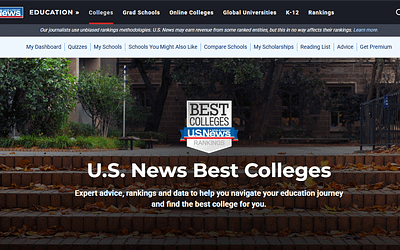
Why U.S. News College Rankings Still Matter in an AI-Driven College Search
Are U.S. News college rankings still relevant in an AI-driven college search? Discover how third-party data strengthens visibility and SEO.



content marketing
Higher ed video marketing is undergoing significant shifts as we move into the future of enrollment marketing.
For small college marketing teams, this change can feel like yet another overwhelming demand on your already stretched time and budget.
You know that video is the most powerful way to tell your story, but the pressure to produce high-quality content—while keeping up with emerging tools like AI—can lead to burnout.
The good news is that the future of video isn’t about expensive production or chasing every viral trend.
Instead, it’s about using technology to amplify the authentic, human connection that is already at the heart of your mission.
In this post, we’ll explore the essential trends and tools that will help your team navigate this landscape with clarity, purpose, and hope.
For years, the standard many institutions have used for higher ed video marketing was the polished, multi-thousand-dollar brand video.
But today’s prospective students—Gen Z and the emerging Gen Alpha—can spot a marketing script from a mile away.
They aren’t looking for perfection. They are looking for authenticity.
When a prospective student hears about a brand from a friend or sees it used within their peer community, they are significantly more likely to engage than when viewing traditional advertising.
The shift toward User-Generated Content (UGC) and peer storytelling is driven by a deep-seated desire for authenticity, transparency, and peer validation.
While brand-authored content is seen as a “perfectly polished” version created by a corporate team, a real-life student’s experience feels unscripted and honest.
This peer influence is especially effective in higher education because it taps into the student’s need for social belonging and shared experiences.
For example, the probability of a student applying to a college increases significantly if a peer from an older cohort has previously applied or enrolled there.

Instead of worrying about high production value, your team can focus on capturing raw, real moments: a student’s reaction to a lab discovery, a quiet moment of prayer on the quad, or a quick “shaky selfie” tour of a dorm.
Imperfection, like an unpolished student video, signals truth and authenticity.
By leaning into unscripted storytelling, you aren’t just saving money; you are building trust.
To make this sustainable, consider empowering a small group of student ambassadors to serve as your on-campus creators.
Give them simple guidelines and let them document their daily lives.
This creates a steady stream of “curiosity content” that makes your institution feel accessible and human.
The rise of generative AI tools like Sora, Google’s Veo, and HeyGen is transforming how we think about content production.
It’s natural to feel a bit of “AI anxiety,” wondering if these tools will replace the creative heart of your team.
But when used with intentionality, AI is a force multiplier for your mission.
The key is to keep a human editor in the loop.
AI should handle the repetitive, tedious parts of video management, freeing your creative team to focus on the deep strategy and storytelling that only humans can do.
As we look toward the future, several cultural shifts will redefine how we use video to connect with students.
We are entering a season where the process is as interesting as the result.
Videos that document a journey—like a student learning a new skill or a faculty member explaining a complex topic in a casual way—are performing exceptionally well.
By inviting prospective students to witness real moments of discovery or even vulnerability, you make your institution feel accessible and human.
Whether it is a “first day in the lab” video or a professor reacting to a viral trend, these spontaneous touchpoints draw students into deeper, more meaningful engagement.
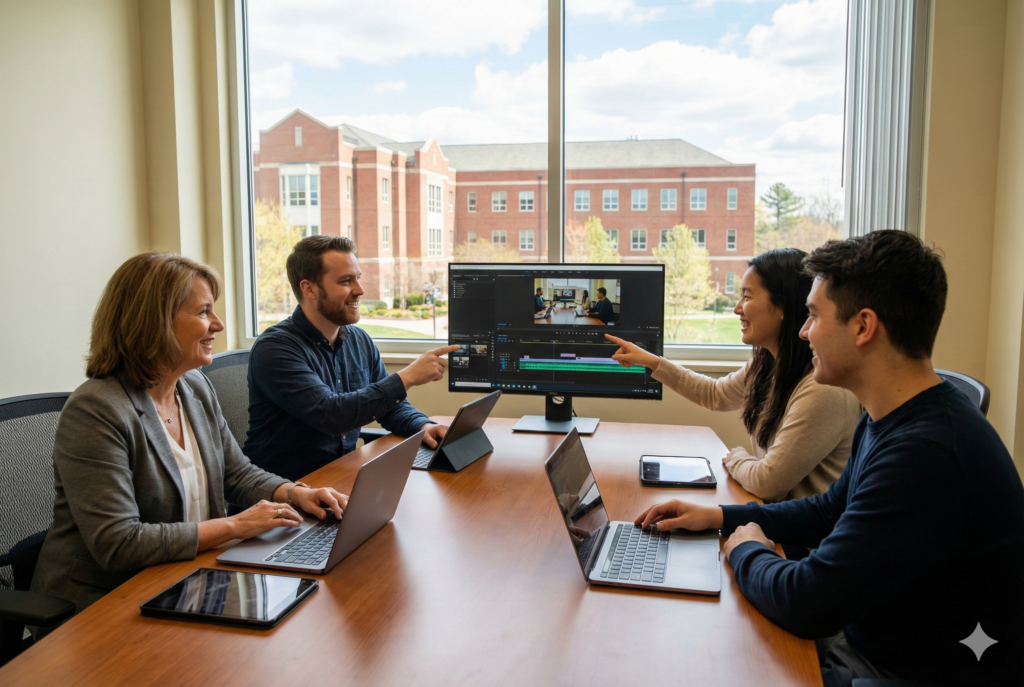
Gen Z and Gen Alpha are increasingly using platforms like TikTok and YouTube as their primary search engines.
They aren’t just looking for “best colleges”; they are searching for “what is dorm life like at [Your College]?” or “how do I apply for financial aid?”
Your higher ed video marketing strategy must include “answer-first” content that directly addresses these search queries.
Today’s students are decision-savvy and digitally fluent. They are researching your school long before they ever fill out an inquiry form.
Providing content that respects their time and directly answers their specific questions is a strategic differentiator.
As digital spaces become more saturated with AI-generated content, there is a growing hunger for the “real.”
More students are becoming weary of screens and “AI-perfect” content, leading to a quiet but powerful return to real-life, in-person moments.
Going forward, the most effective marketing will prioritize human conversation and relational outreach over automated funnels.
Videos that highlight your unique campus culture, from niche alternative sports like pickleball or Esports to specific local traditions, will help mission-fit students see themselves in your community.
These emerging trends signal a clear direction: the future of higher ed video is intensely human, prioritizing genuine connection and spontaneous storytelling over glossy production.
By embracing curiosity content and serving as an “answer-first” video source, your institution can meet today’s digitally fluent students exactly where they are.
Success lies in making the real, mission-driven heart of your campus accessible and authentic.
A: The future of higher ed video marketing centers on radical authenticity, hyper-personalization, and the strategic use of AI video tools.
Bridge the Gap Between Strategy and Execution with Embedded Project Management
Navigating the rapid shift toward authentic video and AI integration can feel like a full-time job on its own.
If your team is already stretched thin by daily demands, the pressure to execute a consistent, future-proof video strategy can quickly lead to burnout.
We do not just hand you a list of recommendations and walk away; we closely integrate with your marketing and communications teams to guide and enhance the execution of your marketing plans.
Through regular planning sessions and progress updates, we ensure that every initiative is optimally executed and stays perfectly aligned with your enrollment and advancement goals.
Often paired with our Fractional CMO services, this approach provides the expert leadership needed to navigate the complexities of 2026 marketing trends without overwhelming your staff.
Let us help you manage the technical puzzles of video production and AI workflows so your team can get back to what they do best: building authentic connections with students and families.
Ready to turn your strategic clarity into measurable momentum?
Reach out today to explore how our Embedded Project Management services can strengthen your team.
Then it’s time to look beyond the same crowded marketing channels everyone else is using. That’s why we want to share our new ebook: 25 Watering Holes No One Has Told You About. 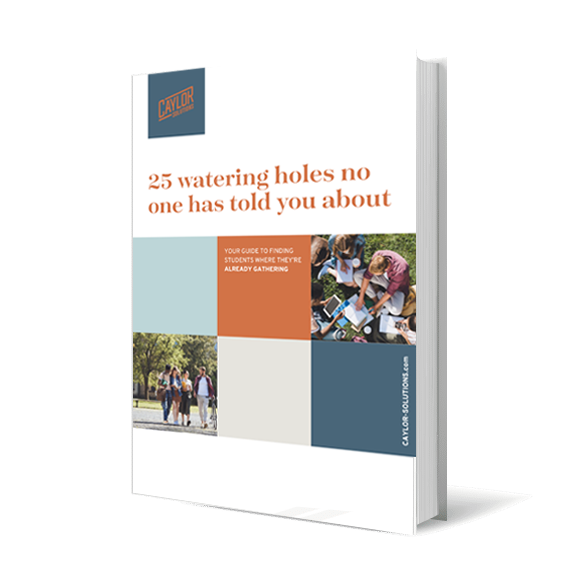
With this practical guide, you’ll discover how to:
In short, you’ll gain a fresh roadmap for connecting with the right students—long before they ever fill out an application. Download your free ebook today!
Images via Midjourney



Subscribe to The Higher Ed Marketer podcast today!
Are U.S. News college rankings still relevant in an AI-driven college search? Discover how third-party data strengthens visibility and SEO.

Mission-fit marketing strategy helps small colleges attract the right students, boost retention, and grow enrollment without compromising identity or values.

Breaking down silos in higher education starts with human storytelling that aligns marketing, enrollment, advancement, and alumni teams.