
Where AI Can (and Can’t) Support Admissions Teams
See where AI admissions support can save time, strengthen communication, and help teams without replacing human judgment.


Branding
If you want to talk about higher education diversity marketing, you can’t just talk about it in theory.
You have to live it.
When I sat down with Amanda Slaughter live at the CCCU International Forum in Dallas, I was struck by something unusual.
She wasn’t stepping into an enrollment crisis. She wasn’t tasked with rebuilding a broken funnel. She wasn’t scrambling to stabilize a declining class.
She walked into health and growth at a deeply diverse Christian institution.
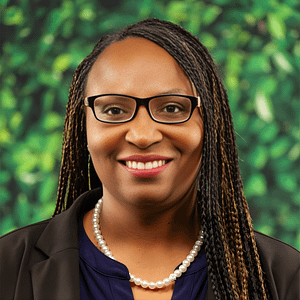 As the new Vice President for Enrollment Management at Fresno Pacific University, Amanda leads enrollment at a school where 74% of students are students of color — most of them domestic.
More than a tagline or aspirational copy. That’s reality.
And that reality shapes everything.
If you’re serious about higher education diversity marketing, what Fresno Pacific is doing deserves your attention.
One of the most refreshing things Amanda said during our conversation was this:
“We don’t want to be a school for everyone. We aren’t trying to go get a new population in Idaho or LA. We are focused on our mission to serve the Central Valley.”
That sentence alone pushes back against the frantic, “chase-every-market” mindset many institutions have adopted.
In an era where institutions are chasing demographic shifts across state lines, buying lists, and stretching digital footprints thinner and thinner, Fresno Pacific is doing something different.
They are rooted.
They serve the Central Valley of California. Period.
They are the only Christian institution in that region. Their focus is not expansion for expansion’s sake. Their focus is faithful execution of mission in a specific geography.
That clarity drives every marketing decision they make.
Higher education diversity marketing is not about adding diverse faces to stock photos. It’s about deciding who you are — and who you are not — and aligning your strategy accordingly.
Amanda used a phrase I appreciated: truth in advertising.
She said,
“From a marketing perspective, we want to be reflective of the community… We practice ‘truth in advertising.’ When you come to campus, you feel the environment we reflect in our marketing.”
The website reflects the campus, and the campus reflects the city it serves.
Even the staff mirrors the families who walk through the doors each day, which means the experience feels consistent from the first click to the first visit.
Many of Fresno Pacific’s students come from low-income backgrounds, and many are the first in their families to attend college.
Quite a few speak more than one language at home. So when parents call or stop by the office, they meet admissions and financial aid counselors who understand that lived experience firsthand.
Speaking Spanish is not treated as a special accommodation; it is simply part of daily life in the office.
That kind of consistency builds trust.
Authentic diversity marketing in higher education requires more than photography and taglines. It requires systems and people who reflect what you say publicly.
When a student arrives on campus and feels at home, that is not branding. That is integrity.

Amanda shared part of her own story. She did not originally see private college as an option. She enrolled as an adult because she assumed it was financially out of reach.
That memory guides how she leads now.
She said,
“You have to talk directly about money and financial aid. You have to engage the parents in that conversation in a very straightforward way. It’s getting back to the basics.”
For first-generation student recruitment strategies, clarity around cost is not an advanced tactic. It is basic hospitality.
If you avoid the financial conversation, families fill in the blanks themselves.
Usually they assume the worst.
At Fresno Pacific, scholarship conversations happen early. Financial aid staff are part of the enrollment strategy, not an afterthought.
The recent fundraising campaign that expanded scholarship dollars gives Amanda’s team real tools to work with. That changes the tone of the conversation with families. They can speak in specifics, not just hope.
Trust grows when the financial story is clear.
Fresno Pacific is a Christian university, and it is one of the most diverse Christian institutions in the country.
That pairing is not accidental.
Amanda had watched the university for years before taking the role.
As a leader of color herself, she noticed that the institution remained rooted in Christian identity while serving a 74% student-of-color population. She was curious what that looked like in practice.
Now she is helping lead it.
Faith-based university enrollment marketing often struggles when institutions assume their messaging only resonates with one cultural background.
Fresno Pacific shows another path. The mission is clear. The theology is clear. The community is diverse.
The key is alignment. Hiring practices, student services, leadership structures, and marketing language all reinforce the same story.
When faith and cultural awareness move in the same direction, students do not have to choose between belonging and belief.
I asked Amanda what it felt like to walk into a healthy enrollment operation.
She called it an enrollment professional’s dream.
The VP role had been vacant for a season. Cabinet leaders stepped in on an interim basis and surpassed enrollment goals.
That says something about institutional culture. Enrollment was not isolated in one office. It was shared across leadership.
Most of her direct reports are new in their roles within the last year or two. She has been in enrollment for two decades.
She sees part of her job as teaching the ropes, passing along what she has learned about markets, financial aid strategy, and cross-campus collaboration.
Growth is easier to sustain when the team understands why decisions are made, not just what decisions are made.
Higher education diversity marketing depends on that internal alignment.
If advancement, academics, and enrollment are pulling in different directions, the public message becomes thin. When those teams are coordinated, the marketing reflects real institutional momentum.

We also talked about AI.
Amanda is direct about it.
“I don’t think you can do your job these days without involving AI, or you’re just not using your time efficiently.”
She said she gains what feels like forty extra hours a week because of how she uses it. That includes drafting, data analysis, preparation for presentations, and organizing her own workflow.
Students, especially students of color who are taking on debt, want to understand what a degree leads to.
They ask about careers, salary potential, and stability. AI helps her refine language so that programs are described in terms of results, not just requirements.
She also imagines a future where her CRM data connects directly to presentation tools, calendar management, and targeted communication.
If homeschool inquiries increase, she wants to see that trend quickly and respond with specific outreach.
If certain scholarship offers drive stronger yield, she wants that pattern surfaced without manual reporting.
Efficiency frees leaders to focus on relationships.
Technology works best when it supports clarity.
When I think about this conversation, one word stays with me: trust.
Students need confidence that the campus reflects the marketing and that families will find what they were promised.
Financial conversations must be handled honestly and early, not tucked into fine print.
Faith and diversity should sit comfortably in the same space, without tension or performance.
And underneath all of it is the expectation that leadership understands the community it serves because it has lived and listened there.
Fresno Pacific serves the Central Valley. It knows who it is for. That focus shapes every decision.
If your institution is wrestling with how to represent diversity faithfully and practically, start by looking inward.
Clarity builds confidence. Confidence builds trust. And trust, over time, builds enrollment.
For even more insights from Amanda Slaughter, listen to the full episode on The Higher Ed Marketer podcast.
Bring Alignment Back to Your Enrollment Strategy
When enrollment feels harder than it should, the issue is rarely effort. More often, it is misalignment.
Admissions, marketing, financial aid, and retention may all be working hard, but not always in sync. Small gaps in communication, workflow, or timing can quietly cost you trust and yield.
We review your workflows, communication strategy, CRM usage, financial conversations, and team alignment. Then we provide practical recommendations you can act on immediately.
If you want growth that reflects your mission and builds real trust with families, it starts with clarity.
Contact us today to begin your Enrollment Assessment.
Then it’s time to look beyond the same crowded marketing channels everyone else is using. That’s why we want to share our new ebook: 25 Watering Holes No One Has Told You About. 
With this practical guide, you’ll discover how to:
In short, you’ll gain a fresh roadmap for connecting with the right students—long before they ever fill out an application. Download your free ebook today!
Featured image via fresno.edu
Other images via chatgpt



Subscribe to The Higher Ed Marketer podcast today!
See where AI admissions support can save time, strengthen communication, and help teams without replacing human judgment.
Discover a practical higher ed change management framework for knowing when to push, pull, or pause while leading through institutional change.

Learn why higher ed marketing clarity matters more than reach—and how private colleges can reduce confusion, build trust, and attract mission-fit students.