
Faithfully Different: Why Mission-Driven Enrollment Strategies Are Winning
Keith Ramsdell of NACCAP shares why mission-driven enrollment strategies give Christian colleges a competitive edge in today’s higher ed landscape.



Branding
Higher ed brand stewardship becomes significantly more complex when an institution must unify its mission and identity across multiple divisions, audiences, and communication channels.
For example, what happens when your brand spans higher education, radio, publishing, and a global legacy that stretches back nearly 140 years?
 That’s the question we explored in a recent episode of The Higher Ed Marketer podcast with Sam Choy, Vice President and Chief Marketing & Strategy Officer at Moody Bible Institute.
Sam’s career spans global corporations, nonprofit leadership, and higher ed marketing.
His unique blend of strategic discipline and mission-centered clarity has equipped him to steward one of the most recognizable legacy brands in Christian higher education.
In a marketplace where institutions compete not only for students but also for trust, cohesion, and relevance, Sam offers a masterclass in higher ed brand stewardship—the kind grounded in mission, unified leadership, and an operating system that keeps 500+ people aligned.
If your institution is juggling sub-brands, navigating silos, or struggling to present a unified voice across departments, there are powerful insights here for you.
Moody Bible Institute is approaching its 140th anniversary, a remarkable milestone for any organization, but especially one operating across three distinct sectors. As Sam explained:
“Moody is about to celebrate our 140-year anniversary… Eventually a publishing entity and our radio network came into reality as well. This coming year is actually our 100-year anniversary of Moody Radio.”
A brand this enduring carries weight. It carries expectation. And it carries a trust that must be honored and carefully protected.
A: The strategic practice of unifying an institution’s mission, identity, and messaging across multiple divisions, audiences, and delivery channels.
Sam reminds us that Moody’s divisions serve very different audiences, yet every one of them must reflect the same brand promise:
“We make sure all of our ministries and all of our divisions are missionally aligned to our brand promise… to prepare folks for their purpose and calling.”
Whether a student arrives on campus, a listener tunes in to Moody Radio, or a reader picks up a Moody-published book, the brand experience must consistently reinforce the same mission.
For institutions with multiple schools, programs, or public-facing brands, this is a powerful reminder: a unified mission is the anchor that keeps every expression of your brand aligned.
Higher ed alone can be a complex brand environment. Add in a national radio network and publishing arm—and the complexity multiplies.
Sam described it plainly:
“We recognize that we are in three very different sectors… Yet the challenge is to maintain one cohesive Moody brand.”
Each division has unique audience needs, engagement patterns, and marketing requirements. A one-size-fits-all approach is neither realistic nor effective.
What makes Moody’s approach noteworthy is the balance between unity and customization:
As Sam added:
“We still need to make sure that the way we engage each of our constituencies… is unique to what their needs are.”
This is a crucial insight for any institution managing multiple audiences. The brand must feel unified at the core—but flexible at the edges.
A: Misalignment leads to siloed messaging, inconsistent student experiences, and weakened trust. Alignment strengthens clarity and supports enrollment success.
One of the clearest strategic decisions Moody has made is embracing a branded house model rather than a house of brands.
As Sam put it:
“We recognize the power of the Moody name… We want to make sure that all of our division and ministry names have the Moody name on it.”
A strong brand strengthens trust. It magnifies recognition.
It allows every department to benefit from the equity of the primary brand.
And it prevents fragmentation, a challenge that plagues many universities where sub-brands drift too far from the institutional identity.
This strategy also pays dividends in enrollment.
I shared on the episode how my own son toured multiple architecture programs, only to realize he didn’t want to pursue architecture anymore. But because he connected with the broader brand culture at the University of Cincinnati, he chose UC anyway.
Sam affirmed this dynamic:
“They trust the Moody name… They get here and think, ‘We’ll find the degree God is calling us to be a part of.’”
Students—even unconsciously—make decisions based on brand trust well before they declare a major.
For institutions seeking to grow enrollment in a highly competitive landscape, this is your reminder: the institutional brand matters just as much—often more—than the program brand.
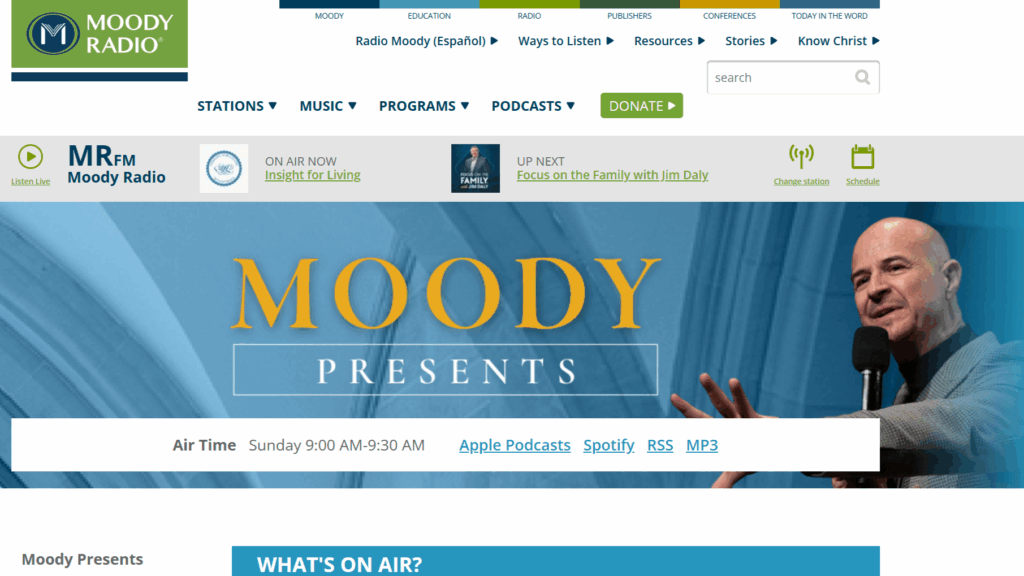
One of the most compelling parts of our conversation was Sam’s perspective on tradition meeting modern digital transformation.
He shared:
“I tell people Moody actually has a legacy of innovation… Even back in the days of our correspondent school.”
This is the sweet spot every legacy institution must find:
Sam put it succinctly:
“The look and feel can always change… but the brand promise is always going to be the same.”
From Instagram to TikTok to AI-powered initiatives, Moody adapts to new channels while anchoring itself in the mission that has defined the institution since the 1800s.
This balancing act isn’t optional anymore—it’s required.
Students, parents, alumni, and donors now expect seamless, digitally fluent, cross-channel brand experiences.
If your institution is not authentically present where your audiences spend their time, your brand risks irrelevance.
A: By embracing digital transformation, leveraging data, adapting creative expression to new channels, and safeguarding the core brand promise.
One of the standout insights from Sam was Moody’s implementation of a management operating system that runs across all divisions and leadership levels.
He explained:
“It forces us to all speak the same language… It allows us to quickly resolve issues because there’s a structured way to meet, discuss topics, and share success stories.”
Too often, institutions try to fix brand fragmentation purely through marketing tactics.
But fragmentation is rarely a marketing problem—it’s an organizational alignment problem.
Moody’s approach illustrates several best practices:
Sam emphasized how this system accelerates strategic clarity:
“Information sharing is a lot easier… Accountability is easier… It’s made us a much more effective organization.”
For institutions struggling with silos—which is nearly all of them—this is a roadmap worth studying.
Sam made it clear that brand and marketing decisions at Moody are deeply informed by data:
“We don’t make any ministry decisions without data… We create personas across all of our ministries because if we don’t know who they are, we don’t know how to best serve them.”
This is where many institutions fall short.
A brand isn’t just what you say about yourself. It’s what your audiences believe about you. And those beliefs must be measured—not assumed.
Moody used persona research not only to understand audiences but also to uncover program gaps.
When prospective students consistently expressed interest in programs Moody didn’t offer, it sparked the launch of a new three-year online business administration degree.
As Sam described:
“Because of that data, we recently launched a three-year… business administration program.”
This is brand stewardship in action: listening to the market while staying true to institutional mission.
Our conversation closed with a powerful truth:
“It starts from the top. It always starts from the top.”
You can have:
…but if leadership is not unified, aligned, and consistently reinforcing the brand promise, nothing else will work.
Sam highlighted how Moody’s three divisional leaders intentionally collaborate to ensure the institution stays aligned—even while each division engages its audience differently.
This is the kind of leadership that creates brand resilience.
One of my biggest takeaways from Sam was his closing encouragement to leaders navigating rapid change.
“Embrace all that seems to be disruptive… AI will only serve to grow the institution in the long run.”
Avoiding disruption doesn’t preserve your brand—it weakens it.
Just as Moody embraced radio in the early 1900s and online education decades before it was mainstream, today’s institutions must embrace:
As I shared at the end of the episode, “change management is going to be one of the most important skills for higher ed leaders in the next few years.”
Institutions that cling to what has always been will struggle. Those that adapt with intention, clarity, and mission-centered purpose will thrive.
For even more insights from Sam Choy, listen to the full episode on The Higher Ed Marketer podcast.
Ready to Strengthen Your Brand Across Every Division?
If your institution—like Moody Bible Institute—is managing multiple divisions, schools, programs, or public-facing brands, you already know the truth Sam Choy made clear in the podcast:
Brand alignment starts at the top, requires intentional strategy, and only succeeds when the entire organization moves together.
That’s where we come in.
At Caylor Solutions, our Consulting Services are designed to help higher education leaders build the clarity, cohesion, and momentum required to unify complex institutional brands and strengthen enrollment results.
Whether your challenges involve branding, internal alignment, student recruitment systems, or adapting to disruptive tools like AI, our team provides the strategic guidance you need to move forward with confidence.
Fractional CMO Services
Get executive-level marketing leadership without the full-time cost. We help you align your brand across every school, division, and communication channel—just like the cross-divisional operating systems Sam described.
Strategic Ideation Retainers
When your team needs fresh thinking, objective insight, or help breaking down silos, our monthly ideation support brings structure and creativity to your planning cycles.
Monthly Coaching for Marketing & Enrollment Teams
Give your staff the guidance, tools, and accountability they need to execute consistently. We help your team build the habits and processes that keep your brand unified across programs, campuses, and audiences.
Practical AI Application for Higher Ed
As Sam emphasized in the episode, institutions must embrace disruptive technologies to remain relevant. We show your team exactly how to adopt AI safely, strategically, and effectively—without compromising your mission, values, or academic integrity.
If you’re ready to elevate your brand, unify your divisions, and equip your team to serve today’s students with clarity and confidence, Caylor Solutions is here to help.
👉 Schedule a consultation today—and let’s create your institution’s next 140 years of impact.
Then you’ve got to know how to write for the web. That’s why we want to send you our popular ebook: Writing for the Web: 7 Secrets to Content Marketing Success for Education Marketers!
With this helpful resource, you’ll learn how to:
In short, you’ll be able to write the copy that makes your digital marketing strategy work for you. Download your copy today!
Featured image via moody.edu

Subscribe to The Higher Ed Marketer podcast today!
Keith Ramsdell of NACCAP shares why mission-driven enrollment strategies give Christian colleges a competitive edge in today’s higher ed landscape.

Discover how an AI social media strategy for higher ed can help marketing teams boost conversions, save time, and amplify authentic stories.
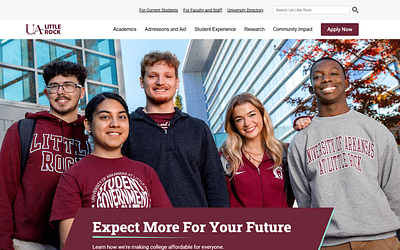
Discover how UA Little Rock turned its university website into a student-focused digital front door that drives engagement and supports enrollment goals.