
Enrollment Leadership Development: Preparing the Next Generation
Discover why enrollment leadership development is essential to building stronger teams, retaining top talent, and preparing future higher ed leaders.


Websites
As part of our Summer Rewind series on The Higher Ed Marketer podcast, we’re revisiting this conversation with Paul Garner about what it really takes to lead a successful higher ed website redesign.
Executing your higher ed website redesign strategy looks straightforward on paper.
Audit the site. Choose a new CMS. Update the design. Launch something better.
But anyone who has actually led one knows it rarely plays out that cleanly.
With any website redesign, there’s a mix of excitement, anxiety, and, if we’re being honest, a little bit of dread.
And it’s not because of the technology, but because of everything that surrounds it.
You ask departments for updated content and get incomplete answers or outdated information. Feedback cycles stretch longer than expected because stakeholders cannot agree on priorities. Conversations about navigation and messaging turn into debates about ownership and visibility. And just when things feel aligned, a new opinion or direction resets the conversation.
That is where the tension comes from. It isn’t the homepage layout or the CMS.
It is the challenge of gathering information, building consensus, and making decisions across a campus full of smart, invested people who all care deeply about their work.
Website redesigns are rarely about the website.
They’re about people.
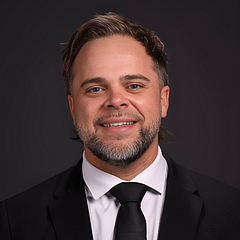 In this episode of The Higher Ed Marketer, we sat down with Paul Garner, Executive Director of Marketing and Communications at Western Carolina University and discussed his team’s experience with their website redesign. What stood out immediately wasn’t his technical expertise. It was his clarity.
Paul said something that I think every higher ed marketer needs to hear:
“The complexity wasn’t technical, it was human.”
And just like that, the entire conversation shifted.
Because if your website feels broken, there’s a good chance your process, not your platform, is the real issue.
Most institutions approach a website redesign as a technical project.
New CMS, templates, and navigation.
And while those things matter, they are not the reason projects succeed or fail.
Paul stepped into Western Carolina knowing the website hadn’t been meaningfully updated in over a decade.
But the real issue wasn’t outdated code. It was misalignment.
The site had become what he called a “junk drawer.” Every department had added something.
Every page had an owner, and as a result, every edit felt personal.
This is where many higher ed website redesign strategies go sideways.
When that happens, progress slows. Conversations become circular.
Teams get stuck trying to accommodate every request, and the site gradually loses its ability to serve any one audience well.
Instead of a clear user experience, the result is a fragmented system shaped more by internal politics than by user needs.
Paul recognized early on that this wasn’t a design challenge.
It was a change management challenge.

One of the most powerful decisions Paul and his team made was deceptively simple:
The website is for prospective students.
That became the North Star.
Now, does that mean alumni, faculty, advancement, and athletics do not matter? Of course not.
But without a clear primary audience, your website becomes a digital bulletin board instead of a strategic enrollment tool.
Without that kind of clarity, a website quickly turns into a digital bulletin board, where every message competes for attention and nothing stands out.
Paul described how their previous homepage reflected this exact challenge. With more than 100 clickable links, users were not guided. They were overwhelmed.
The shift required more than a new design. It required discipline.
The team had to rethink how users actually experience a website, moving from internal assumptions to real user behavior.
That meant leading with story, simplifying navigation, and structuring content around the natural journey of a prospective student.
Because saying no to a request is rarely about content. It is about priorities, ownership, and perception.
It requires leadership to hold the line and reinforce that every decision is being made in service of a larger goal.
This is where a strong higher ed website redesign strategy takes shape.
If there is one theme that ran through this entire conversation, it is this:
Trust is the strategy.
Paul did not walk into Western Carolina trying to fix things. He walked in trying to understand them.
Instead of leading with solutions, he led with presence.
He spent time walking across campus, meeting stakeholders face-to-face, and listening closely to their concerns, especially the frustrations that lingered from past initiatives.
He paid attention to how decisions were made, who was involved, and why certain processes existed in the first place.
And that mattered, especially because there was institutional memory from a previous redesign that had not gone well.
People were hesitant. Some were skeptical. Others were simply tired.
So instead of forcing change, Paul built trust first.
“Showing up and being authentic… just showing up for people and truly learning what they were doing.”
That kind of leadership is not flashy, but it is effective.
It creates the conditions where people feel heard, where concerns can be addressed, and where progress becomes possible.
Over time, that trust becomes the foundation that allows teams to move forward, even when the work is difficult or uncomfortable.

Here is the part we do not talk about enough: a website redesign is one of the most complex change management efforts on campus.
Every page has an owner, which means that every piece of content represents someone’s work.
And every proposed change can feel like a loss of control or a loss of identity.
That reality changes how you have to lead.
That means acknowledging concerns early, being transparent about constraints, and consistently communicating not just what is changing, but why it matters.
Paul and his team made a deliberate effort to bring people into the process rather than working around them.
They created space for dialogue, named potential tension points before they became problems, and worked to make decisions alongside stakeholders whenever possible.
They also understood that the early stages of the project were not about collecting feature requests.
They were about building alignment.
By listening first and clarifying shared goals, they were able to guide the project with greater confidence and less resistance.
This is what separates a successful higher ed website redesign strategy from one that stalls out.
Here is something I appreciated about Paul. He did not pretend everything was perfect after launch.
In fact, he was candid about the challenges that came after the site went live.
This is where many teams lose momentum.
The big launch happens. Everyone exhales. And then things start to drift.
Paul talked about the importance of holding the line, but doing it with empathy.
That balance matters.
You cannot abandon your strategy the moment there is pushback. You also cannot ignore valid concerns from your campus community.
Instead, you:
Over time, something shifts.
Resistance turns into understanding.
This is the work most people never see, but it is where real progress happens.
A higher ed website redesign strategy succeeds or fails not at launch, but in how well you lead people through what comes next.
If you can hold that balance of clarity and empathy, you do not just launch a better website, you build a stronger institution.
For even more insights from Paul Garner, listen to the full episode on The Higher Ed Marketer podcast.
How Caylor Solutions Helps You Lead Website Redesigns That Actually Work
If this sounds familiar, you are not alone.
Most institutions do not struggle with design or technology. They struggle with alignment, communication, and execution across campus.
That is where website projects break down.
At Caylor Solutions, we do more than design websites.
We partner with your team to bring clarity, guide decision-making, and navigate the real challenges of content, consensus, and change.
From strategy through launch and beyond, we build websites that support enrollment and stay aligned long after go-live.
Contact Caylor Solutions today to build a website that works for your people, your mission, and your students.
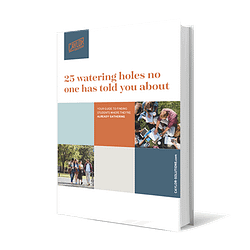
Then it’s time to look beyond the same crowded marketing channels everyone else is using. That’s why we want to share our new ebook: 25 Watering Holes No One Has Told You About. 
With this practical guide, you’ll discover how to:
In short, you’ll gain a fresh roadmap for connecting with the right students—long before they ever fill out an application. Download your free ebook today!



Subscribe to The Higher Ed Marketer podcast today!
Discover why enrollment leadership development is essential to building stronger teams, retaining top talent, and preparing future higher ed leaders.

See where AI admissions support can save time, strengthen communication, and help teams without replacing human judgment.
Discover a practical higher ed change management framework for knowing when to push, pull, or pause while leading through institutional change.