Build a Higher Education Press Release Strategy Like a Higher Ed Newsroom
Rethink your higher education press release strategy with newsroom-style storytelling that earns media attention, strengthens reputation, and supports enrollment.


Featured
With the increasingly present challenge of the enrollment cliff and the competition among educational options getting tougher, mastering effective higher ed leadership strategies is more essential than ever.
And this isn’t easy as leaders are often pulled in a thousand directions.
But for Erick Klein, Vice President for Enrollment & Marketing at the University of Northwestern–St. Paul, chaos isn’t an inevitability—it’s a challenge to be systematized.
 In this episode of The Higher Ed Marketer, Erick offers not just advice, but a blueprint for how intentional systems and strategic stewardship can help higher education leaders optimize their teams, align with institutional mission, and lead with clarity.
Let’s explore how Klein’s approach to time, tools, and trust is redefining what leadership looks like for lean enrollment and marketing teams.
One of the most practical insights Erick offers in the episode is how deeply he integrates systems into his day-to-day leadership.
But these aren’t systems for the sake of control—they’re tools for clarity.
“When we steward time well, we can be present, not just productive.”
At the heart of Klein’s productivity philosophy is a tool called Todoist, which he uses to manage tasks by project and deadline.
The tool isn’t just about checking boxes. It’s more about organizing cognitive load so that his brain is free to focus on people, ideas, and deeper work.
Erick also introduces listeners to a framework he’s passed on to his team: Do More Better by Tim Challies.

Erick is careful to make sure these ideas aren’t lofty theories.
They’re road-tested practices helping his team at Northwestern-St. Paul stay centered amidst a busy enrollment calendar.
For enrollment leaders juggling recruitment events, team development, and institutional planning, adopting systems that offload the mental clutter can be transformational.
As Erick explains, systems like these give him the margin to be both thoughtful and responsive in his leadership.
In the episode, Erick broadens the traditional definition of stewardship.
While financial oversight is part of his role, he emphasizes a more holistic view: stewardship of brand, time, influence, and people.
“I’m constantly asking, ‘What is my unique stewardship?’ That’s not just about budget—it’s about where I bring the most value to the team.”
This mindset shift affects how he structures meetings, mentors staff, and communicates across departments.
He talks about being “ruthlessly realistic” with time.
That kind of clarity frees everyone to focus on their highest and best contributions.
It’s also clear that for Erick, stewardship and trust go hand in hand.
He speaks candidly about building cabinet-level relationships through consistency, presence, and clear communication.
The goal isn’t just alignment—it’s mutual understanding and respect across functions.
A: Effective higher ed leadership strategies include using intentional systems like Todoist for task management, aligning team goals with institutional mission, and focusing on stewardship of time and people. Leaders like Erick Klein recommend structured meeting rhythms and productivity frameworks to reduce overwhelm and optimize performance.
When asked how he ensures that his team stays aligned with institutional goals, Erick points to his team’s regular “mission alignment” meetings.
Together, they create structured, repeatable rhythms designed to keep priorities in check.
While strategy and execution are key, Erick keeps a tight focus on identity and purpose.
He returns often to Northwestern-St. Paul’s institutional distinctives, which serve as a filter for decision-making in marketing and enrollment.
Instead of being pulled toward the latest tactic or trend, his team operates from a place of grounded intentionality.
That alignment is especially critical in seasons of high-pressure admissions goals or shifting demographics.
This approach reflects true higher ed leadership strategy—aligning purpose with performance.

A highlight of the episode is Erick’s commitment to developing young leaders—especially in the often-transient roles of admissions and marketing.
He shares openly about creating space for team members to grow by giving them increasing levels of responsibility, mentorship, and feedback.
“I want people to leave our team more equipped and confident than when they came in.”
This isn’t just good management—it’s a long-term investment in the health of the institution.
From delegation frameworks to coaching conversations, Erick sees leadership not as a position but as a stewardship to be multiplied.
For higher ed professionals thinking about succession planning, team retention, or onboarding, this part of the conversation is rich with actionable insights.
Erick shared many of the exact tools and meeting rhythms that help his team stay focused and connected:
They know what’s expected, where to bring questions, and how to stay on mission—even when workloads increase.
Leaders looking for practical ways to support overwhelmed staff should take note: systems don’t have to be stifling.
When implemented with care and clarity, they provide the freedom to focus and the confidence to execute.
This episode stands out for its calm confidence.
Erick Klein doesn’t claim to have all the answers, but he models a way of leading that is thoughtful, strategic, and above all, human.
His approach isn’t about adding more complexity. Instead, it’s about choosing fewer, better things to do well.
For enrollment and marketing leaders trying to navigate limited resources, changing demographics, and increasing expectations, that message is a breath of fresh air.
Whether you’re leading a team of two or twenty, systematizing to optimize might be your next right move.
This mindset and approach reflect the most impactful higher ed leadership strategies in today’s complex environment.
If you’re feeling overwhelmed by competing priorities and unclear goals, take a page from Erick Klein’s playbook.
Start with a system.
Clarify your stewardships.
Re-align with your mission.
And most of all, equip your people with the clarity and tools they need to thrive.
For even more insights from Erick Klein, listen to the full episode on The Higher Ed Marketer podcast.
Want to Take These Leadership Strategies Even Further?
At Caylor Solutions, we don’t just talk about higher ed leadership strategies—we bring them to your campus.
🎤 Book Bart Caylor for Your Next Keynote Event
With over 35 years of marketing expertise and a deep understanding of higher education, Bart Caylor delivers dynamic keynote presentations that empower enrollment and marketing leaders to lead with clarity, creativity, and purpose.
Whether you’re looking to explore topics like:
…or custom themes like systematizing leadership for small teams, Bart’s sessions are crafted to equip and inspire.
Each 60–90 minute session is tailored to your audience, offering practical tools and real-world strategies—just like the ones featured in this episode with Erick Klein.
🔥 Walk away with clarity, confidence, and actionable insights to face the future of higher ed with strategy and heart.
👉 Learn More About Booking Bart »
Then you’ve got to know how to write for the web. That’s why we want to send you our popular ebook: Writing for the Web: 7 Secrets to Content Marketing Success for Education Marketers!
With this helpful resource, you’ll learn how to: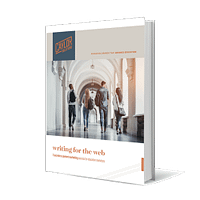
In short, you’ll be able to write the copy that makes your digital marketing strategy work for you. Download your copy today!
Featured image via unwsp.edu
Other images via Midjourney



Subscribe to The Higher Ed Marketer podcast today!
Rethink your higher education press release strategy with newsroom-style storytelling that earns media attention, strengthens reputation, and supports enrollment.

Build alumni advocacy for recruitment through mentoring, speaking, events, and relationships before financial asks.
Build a stronger higher education advertising strategy by combining digital campaigns with in-school media that reaches real students before the funnel.