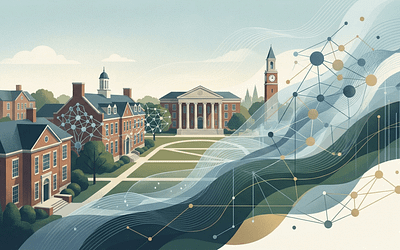
10 Practical Moves for an AI Strategy in Higher Education
Explore 10 practical moves for an AI strategy for higher education, with insights from the State of AI report and clear next steps for leaders.



Featured
When it comes to attracting prospective students, your university website is often the very first stop they make.
It’s your digital front door, the gateway to your institution, your programs, and your value proposition.
 In this episode of The Higher Ed Marketer, Troy Singer and I sat down with Meaghan Milliorn, Senior Director of Web Strategy and Operations at the University of Arkansas at Little Rock, to talk about one of the most critical tools in your marketing toolkit: your university website.
From first impressions to strategic overhauls, Meaghan gives us a practical roadmap for transforming a static web presence into a dynamic recruitment asset.
Meaghan refers to the university website as the “digital front door” for a reason.
“When prospective students visit your site, it’s often the first interaction they have with your institution. If the experience is clunky or hard to navigate, they’ll quickly move on to the next school.”
The stakes couldn’t be higher. Your site’s performance and usability can either invite students in or push them away.
A website that doesn’t load quickly or isn’t mobile-friendly will turn users away in seconds.
If students can’t easily find what they’re looking for—whether that’s programs, costs, or visit information—they’ll assume your institution is just as disorganized offline as it feels online.
Navigation and user experience are no longer technical concerns; they’re brand signals.
We’re not talking about bells and whistles. We’re talking about clear, intuitive design.
A site that’s fast. One that works seamlessly on mobile, since that’s how most prospective students are searching. These things aren’t optional anymore.
If your website hasn’t been updated in years or was built with internal stakeholders (instead of students) in mind, you may already be losing out on key engagement moments.
“Your website is your number one marketing asset. It’s the one place that’s always available, day or night, to showcase what your university has to offer.”
Your website is the only marketing channel that works for you 24/7—no matter the time zone, holiday, or snow day.
It’s the one place where a prospective student, parent, or donor can go at any hour and get a sense of who you are.
But too often, we treat it like a glorified brochure.
Think about it—your website is where you showcase your academic programs, scholarships, and student life.
It’s where you guide people from curiosity to commitment, whether that’s scheduling a visit, starting an application, or making a donation.
And perhaps most importantly, it’s where you build trust.
When someone visits your site and sees an experience that’s well-designed, up-to-date, and reflective of your values, they begin to believe that your institution can deliver what it promises.
And when it’s done well, it quietly does the heavy lifting of recruitment and retention in the background—without anyone having to click “boost post” or send another email blast.
Meaghan’s insights remind us that we don’t just need beautiful websites.
We need strategic websites that reflect our institution’s values, answer our audiences’ questions, and make it easy for them to take the next step.
UA Little Rock recently undertook a massive redesign of their university website, and Meaghan’s leadership helped guide that process from chaos to clarity.
She shared several lessons that will resonate with any higher ed marketing team:
“You can’t set it and forget it. Your website should be as fresh as your institution.”
Whether it’s a simple content refresh or a design upgrade, regularly scheduled updates help keep your site aligned with current goals.

Today’s students expect intuitive, clean, and fast-loading web experiences. Meaghan emphasized designing for the user, not for internal departments.
That means simplifying navigation, focusing on tasks students want to complete, and reducing page clutter.
“We went from 8,000 pages to about 5,000, and we’re still trimming.”
That kind of discipline takes campus-wide buy-in, but the results are worth it.
Analytics are key. UA Little Rock didn’t just guess what pages needed attention—they measured performance and engagement, and made decisions based on real data.
“We track everything. What users are clicking, where they’re going, and what’s falling flat. Then we adjust.”
This approach ensures that the website is always evolving based on user behavior, not internal assumptions.
One of the biggest takeaways from Meaghan’s process was the importance of governance.
UA Little Rock implemented a review process where every department’s page had to meet accessibility and content quality standards before going live. Departments were empowered but also accountable.
“It wasn’t about controlling everything. It was about making sure everything met a certain standard and supported our strategic goals.”
For institutions struggling with sprawling content and conflicting messaging, this kind of centralized-yet-collaborative approach is a game changer.
One area Meaghan is particularly passionate about is web accessibility.
“Accessibility isn’t optional. It’s part of serving all your students.”
Their team made it a priority to ensure that color contrast, screen reader compatibility, and alt text were fully implemented across the site.
If your website doesn’t meet accessibility standards, you’re not only creating a legal risk—you’re shutting out an entire group of prospective students.
So many institutions are quick to invest in digital ads, social media campaigns, or email automation—but neglect the foundation of their digital presence.
If your university website doesn’t reflect your brand, support your goals, and make it easy for students to take action, the rest of your marketing will suffer.
“The website is where your audience goes after they see your ad. If it’s not helping them take the next step, what’s the point?”
…or a line item in the marketing budget—it’s your institution’s most visible, accessible, and influential storytelling platform.
As Meaghan so clearly laid out, it’s the first impression, the ongoing conversation, and the decision point for countless prospective students and their families.
If your digital front door doesn’t open smoothly, doesn’t invite people in, or doesn’t reflect the kind of experience you’re promising, you’re missing the moment.
And in today’s competitive higher ed landscape, you can’t afford to miss that moment.
For even more insights from Meaghan Milliorn, listen to the full episode on The Higher Ed Marketer podcast.
Want Help Reimagining Your Digital Front Door?
At Caylor Solutions, we believe your university website shouldn’t just look good—it should work hard for you.
Whether you’re looking to redesign from the ground up or just need a trusted partner to keep things running smoothly, we offer tailored services that focus on enrollment, usability, and strategic impact.
Our full-service website design and development projects are crafted specifically for higher ed institutions that need a site aligned with strategic enrollment goals.
From intuitive navigation to mobile-first design, we focus on what matters most: turning prospective students into applicants.
And we don’t stop at website creation.
This isn’t set-it-and-forget-it support—it’s ongoing partnership from a team that understands how mission-critical your website is for enrollment and engagement.
Let’s talk about your digital front door. Reach out today to start a conversation.
Then it’s time to look beyond the same crowded marketing channels everyone else is using. That’s why we want to share our new ebook: 25 Watering Holes No One Has Told You About. 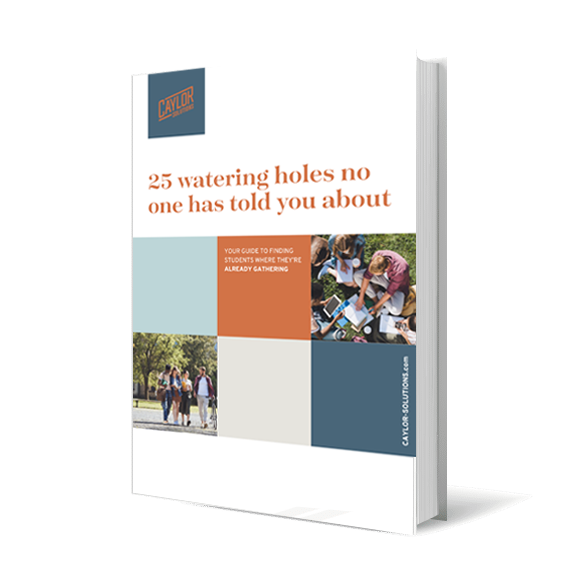
With this practical guide, you’ll discover how to:
In short, you’ll gain a fresh roadmap for connecting with the right students—long before they ever fill out an application. Download your free ebook today!
Featured image via ualr.edu
Other image via chatgpt.com


Subscribe to The Higher Ed Marketer podcast today!
Explore 10 practical moves for an AI strategy for higher education, with insights from the State of AI report and clear next steps for leaders.

Your institution’s higher education homepage should stand as a testament to your values AND resonate with mission-fit students. These seven elements will make your homepage unstoppable!

Discover the future of higher ed video marketing. Learn how to balance AI video tools with the radical authenticity today’s students crave.