
Building Trust in Higher Education to Attract Students to a Brand New University
Building trust in higher education starts with a clear mission. Discover how new universities can attract students, earn credibility, and grow enrollment.


Featured
AI marketing leadership in higher ed is changing. And it presents some exciting opportunities for CMOs and VPs.
AI can help teams write content, study data, and handle routine tasks. It can save time and give smaller marketing teams access to tools that once required much larger budgets.
But new technology also brings new leadership questions.
Where should we use AI? How do we know it’s helping? How do we know when it’s hurting? What decisions still need a human touch? And how can we help our teams use these tools well?
I believe these are some of the most valuable conversations higher ed marketing leaders can have right now.
AI gives us a chance to spend less time managing production and more time thinking about strategy, students, and the future of our institutions.
Let’s look at what that could mean for your role and your team.
AI marketing leadership in higher ed will focus more on strategy, sound judgment, and teamwork across campus.
As AI helps with writing, research, data analysis, and routine tasks, CMOs and VPs can devote more attention to bigger decisions. They’ll need to set clear priorities, guide responsible AI use, and bring people together around shared goals.
Key skills will include AI fluency, data literacy, critical thinking, communication, and change leadership.
For smaller colleges, the best starting point is often simple. Choose one useful application. Set clear expectations. Test it with your team. Then measure whether it saves time, improves communication, or helps prospective students.
The goal is to use AI in ways that support your institution’s mission and make your marketing more effective.
AI can help us do more marketing work in less time.
That’s good news for teams with busy schedules and limited resources.
But more activity doesn’t always lead to better results. A team can produce twice as much content without attracting more qualified inquiries. A campaign can reach more people without reaching the students who are the best fit.
This is where leadership makes a difference.
The 2026 McKinsey State of AI survey offers an interesting example.
Eighty percent of respondents said AI improved their personal productivity. Yet only 37% reported a positive impact on their organization’s earnings.
The survey covers businesses across industries, not college enrollment teams. Still, it raises a useful point.
Saving time is valuable. But we also want that time to produce meaningful results.
For a college marketing team, that might mean helping more students schedule campus visits. Or giving admissions counselors better information for their conversations with families.
It might mean finding new ways to explain what makes your institution special.
Before choosing another AI tool, I would encourage marketing leaders to ask a few questions:
These questions give AI a purpose.
They also connect naturally to mission-fit marketing.
We want to help the right students discover our institutions. We want them to understand what makes our colleges different. And we want to give them the information they need to make good decisions.
AI can help with that work.
The key is knowing what we’re trying to accomplish before deciding how to use the technology.

One of the most useful things about AI is how quickly it can create content.
Give it a topic and a few instructions, and it can produce a draft in seconds.
That speed is helpful. But it also creates a need for careful review.
Imagine using AI to write a landing page for a nursing program.
The draft sounds great. It explains the program clearly and includes a strong invitation to apply.
But one detail is wrong. Maybe the admissions requirements have changed. Or the description includes a clinical experience the college doesn’t offer.
Someone needs to catch that mistake before the page goes live.
That’s why human judgment will remain so important.
Marketing leaders can help their teams understand which tasks are well suited for AI and which need extra care.
Stanford University’s AI guidelines for marketing and communications offer a helpful example. Stanford encourages thoughtful use of AI while setting standards for accuracy, privacy, and human oversight.
Every institution will need an approach that fits its own needs and resources.
I would start by thinking about three types of work.
These three categories are a starting point, not a complete AI policy.
The goal is to make it easier for people to use AI with confidence.
For more guidance, I’ve also written about AI ethics in higher ed marketing and the importance of protecting trust.
One of the things I find interesting about AI is how it can bring different parts of a college into the same conversation.
Marketing, admissions, academics, financial aid, and IT all play a part in helping students.
Each department also brings its own knowledge.
Think about a college that wants to use an AI-powered assistant to answer questions from prospective students.
Marketing can help shape the message and student experience.
Admissions can identify common questions and concerns.
Academic departments can provide accurate program information.
Financial aid can explain what students need to know about paying for college.
IT can help evaluate the technology and protect student information.
Working together gives the college a better chance of creating something useful.
And the marketing leader can help connect those conversations.
You don’t need a large committee to begin.
A small working group may be enough. Invite a few people who understand the process you want to improve.
For example, you might choose a project that helps staff prepare answers to common campus visit questions.
Bring together the people who know the information, the people who communicate with students, and the people who support the technology.
Then ask:
Start with one project. Learn from it. Then decide what comes next.
This kind of collaboration can do more than improve an AI workflow. It can also help departments understand each other’s work and build stronger relationships.
That’s a valuable outcome on its own.
AI may change some of the tasks we perform. It also gives us a reason to keep growing as leaders.
The 2026 EDUCAUSE Workforce Report found that higher education technology and data teams are adapting to new demands. Many expect to help guide AI strategy, but a majority of those respondents felt only somewhat prepared for that responsibility.
That’s understandable. These tools are changing quickly.
The good news is that marketing leaders don’t need to master every new platform. They need a few core skills that help them make good decisions.
Here are four I would focus on.
You don’t need to become a technical expert.
But it helps to spend time using AI yourself.
Try asking it to summarize an article. Use it to create a first draft. Ask it to compare two marketing ideas.
Then look closely at the results.
What did it do well? What did it miss? Where did you need to step in?
The more you use these tools, the better you’ll understand where they can help your team.
And you’ll be better prepared to guide conversations about AI.
AI can analyze information and suggest ideas.
But the quality of the results depends on the questions we ask and the information we provide.
Suppose AI shows that a campaign brought more visitors to your website.
That’s useful.
But you’ll also want to know who those visitors were. Did they explore your programs? Did they request information? Were they students your institution is well suited to serve?
The same principle applies to any AI-generated recommendation.
Look at the evidence. Check the assumptions. Ask what the results mean for your enrollment goals.
Good marketing leadership has always required these skills.
AI gives us more opportunities to use them.
New technology often raises questions.
Someone may be excited about what AI can do. Someone else may have concerns about accuracy, privacy, or the effect on their work.
Both perspectives can help.
A good leader makes room for those conversations.
Listen to what people need. Explain what you’re hoping to accomplish. Invite them to help shape the approach.
You don’t need every person to become an AI enthusiast.
You do want people to understand the goals and feel confident about their part in the process.
AI tools will continue to change.
Rather than trying to learn everything at once, build learning into your team’s regular work.
You might spend 15 minutes during a staff meeting sharing a useful AI experiment.
Ask someone to demonstrate a new workflow. Review an AI-generated draft together. Talk about what worked and what needed improvement.
Small conversations like these can help people grow more comfortable with the technology.
They also give your team a chance to learn from each other.
For a broader look at team development, see our article on future-ready marketing skills for higher education.

As AI becomes part of marketing work, I think three shifts in how we approach leadership will be especially helpful.
AI may help your team write more emails, publish more content, or prepare campaigns faster.
That’s useful.
But it’s also worth asking whether the work is helping your institution reach its goals.
Are more students finding helpful information? Are inquiries becoming more qualified? Are prospective students getting a clearer picture of campus life?
Those results tell us more than the number of things we produce.
Your team needs to know how AI fits into its responsibilities.
That includes knowing which tools are approved, what information is safe to use, and when a task needs human review.
Once those expectations are clear, give people room to experiment within them.
Encourage good ideas. Invite questions. Make it easy to share lessons.
Over time, your team can develop better ways of working.
This may be one of the biggest opportunities AI offers.
Imagine a content specialist who spends less time preparing first drafts.
That extra time could go toward interviewing students, talking with faculty, or finding stronger stories to tell.
An admissions counselor might use saved time to have more personal conversations with prospective families.
A marketing director might finally have time to review the enrollment website and improve the student journey.
AI can create more room in the schedule.
Leadership helps decide how to use it.
If you’re thinking about how to bring AI into your marketing work, start small.
You don’t need to redesign your entire department.
Choose one useful project and spend a month learning what works.
Talk with your team.
Ask which tasks take more time than they should. Look for places where a simpler process could help staff or students.
Choose one project with a clear goal.
For example, you could test whether AI helps your team prepare accurate answers to common campus visit questions.
Take note of how the process works today.
Decide how your team will use AI for the project.
Which tool will you use? What information can you provide? Who will check the results?
Bring in IT or other departments when needed.
Write down the basic steps so everyone knows what to do.
Keep it simple enough that people will actually use it.
Test the new process with a few real examples.
Use public or properly approved information.
Have your team review what AI produces.
Is the information correct? Does it sound like your college? Is it helpful to students? Does it save time?
Notice what works and what needs to change.
Compare the new process with the old one.
Did it save time? Did it make the work easier? Was the final result as good as, or better than, what you produced before?
Ask your team for feedback.
If the experiment worked, consider where to go next.
If it didn’t, that’s useful information too. You can improve the process or try something different.
The goal is to learn something that helps your team make better decisions.
AI will keep changing what marketing teams can do.
New tools will make some tasks easier. Others may help us understand audiences, improve communication, or make better use of our resources.
I find that encouraging.
But I also believe the most important parts of higher education marketing will remain deeply human.
We still need to understand students and their families.
We still need to tell honest stories about our institutions.
We still need to help people see where they belong and what their education could make possible.
And we still need leaders who can bring people together, make thoughtful decisions, and keep the institution’s mission in focus.
That’s where I see the future of AI marketing leadership heading.
The tools will change. Good leadership will help us make the most of them.
Help Your Team Grow With AI
If you’re exploring ways to use AI in your college’s marketing and enrollment work, you don’t have to figure everything out on your own.
At Caylor Solutions, we help higher education teams build the skills and confidence to use AI in practical ways.
Our Custom AI Masterclass is a six-hour, hands-on training experience delivered in two sessions. We cover AI best practices, prompt writing, useful tools, and ways to apply AI to your team’s real work.
It’s an opportunity to learn together, ask questions, and find approaches that fit your institution.
Contact Caylor Solutions to learn more about bringing a Custom AI Masterclass to your team.
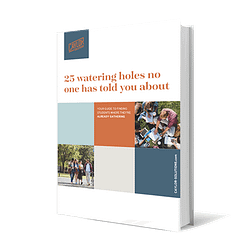
Then it’s time to look beyond the same crowded marketing channels everyone else is using. That’s why we want to share our new ebook: 25 Watering Holes No One Has Told You About.
With this practical guide, you’ll discover how to:
In short, you’ll gain a fresh roadmap for connecting with the right students—long before they ever fill out an application. Download your free ebook today!
images via chatgpt.com


Subscribe to The Higher Ed Marketer podcast today!
Building trust in higher education starts with a clear mission. Discover how new universities can attract students, earn credibility, and grow enrollment.

Simplifying higher ed marketing starts with better campaign priorities. Learn what to continue, combine, pause, or eliminate.

Discover how intentional leadership in higher education helps leaders break the reaction cycle, reclaim time for strategic thinking, and empower their teams.